The Yanhua Mini ACDP (and its second-generation successor, the ACDP-2) is a staple in the automotive locksmithing and module repair industry. It carved out its reputation with a highly specific value proposition: “No-soldering, no-wire-cutting, and no-component-removal” data reading.
The standout feature of the Yanhua ecosystem is its specialized interface boards. Instead of forcing you to desolder EEPROM chips or delicate MCU pins (like standard programmers such as VVDI Prog or CG Pro), Yanhua uses dedicated interface boards equipped with integrated puncture probes and alignment alignment brackets.
You physically clamp the board over the module (such as a BMW FEM/BDC or a Porsche BCM), and the tool automatically checks pin continuity before attempting a read or write.
Pros & Major Strengths
-
Massive Reduction in Human Error (Hardware): For technicians uncomfortable with a soldering iron or hot air station on expensive client modules, the ACDP removes the risk of burnt pads, bridged pins, or heat-damaged components.
-
Intelligent Pin Detection: Before the tool executes a read or write operation, it performs a data-path check. If a probe isn’t making solid contact due to conformal coating or poor alignment, the software warns you before you risk corrupting the file.
-
The Go-To for BMW & VAG: Its coverage for BMW IMMO (CAS1-CAS4+, FEM/BDC, ISN reading, EGS 6HP/8HP clearing) and VAG (MQB/MLB architectures, gearbox cloning) is among the most comprehensive on the aftermarket.
-
ACDP-1 vs. ACDP-2 Upgrades: The original ACDP relied entirely on wireless/Bluetooth connections, which occasionally suffered from interference during critical writes. The ACDP-2 fixes this entirely by introducing a physical USB connection for Android, iOS, and PC alongside the wireless modes.
-
Modular “Pay-As-You-Go” Pricing: You buy the basic hardware master unit cheaply, then only purchase the specific license modules you actually need (e.g., Module 1 for CAS, Module 11 for EGS, Module 25 for VAG gearboxes).
Cons & Vulnerabilities
-
Module Cleaning Prep is Critical: Because it relies on physical contact points, any residual conformal coating, oxidation, or dirt on the vehicle module chip pins will cause reading failures. You must be meticulous with your cleaning probes, which can sometimes take as long as just soldering a wire.
-
Risk of “Brick” on Writing (Software Nuance): While reading is incredibly safe, writing data back to certain high-security modules always carries risk. For example, in VAG RH850/MQB clusters, an unstable connection can occasionally corrupt flash data (though Yanhua’s technical support does offer a data-repair service if you submit the damaged dump file).
-
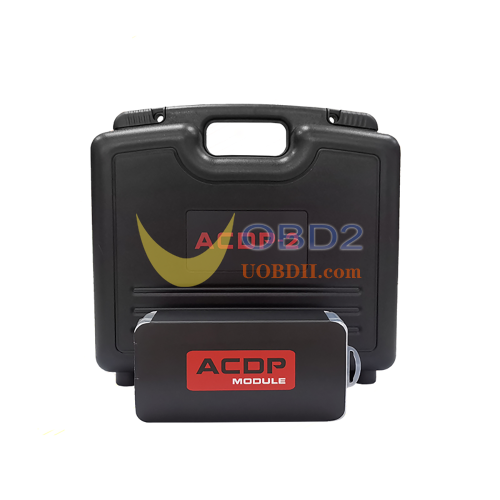
Cluttered Tool Box: Because everything is modular, you will end up carrying a briefcase full of plastic interface boards, cables, and puncture sockets.
-
App UI and Ecosystem Quirks: The app interface (across PC/Mobile) can occasionally feel unpolished or translate poorly from Chinese. While functional, it lacks the slick user-experience of mainstream diagnostic tablets.
Where to buy Yanhua mini acdp/acdp2?
Yanhua Mini ACDP: https://www.uobdii.com/producttags/yanhua-mini-acdp.html
ACDP2: https://www.uobdii.com/producttags/yanhua-acdp-2.html
Final verdict:
Yanhua MINI ACDP/ACDP2 is one of the strongest BMW-focused programming platforms. It is not the cheapest tool, but for shops handling BMW CAS/FEM/BDC/BDC2 jobs regularly, it offers excellent capability and a safer workflow than many traditional methods.
